

GERING develops the Perforated Metal Pizza Turning Peel for home bakers, restaurants, pizzerias, and professional kitchens that need reliable pizza rotation in high-temperature ovens. Its aluminum alloy perforated blade, heat-insulated silicone grip, and rivet-reinforced construction are designed to improve handling while reducing flour buildup and smoke during baking.
A pizza can bake unevenly when it remains in one position inside a very hot oven. A turning peel allows the operator to rotate the pizza without removing it from the cooking chamber, helping maintain heat and improve crust consistency. The perforated structure provides an additional advantage by reducing excess flour accumulation on the blade and allowing airflow beneath the pizza. GERING's model combines an aluminum alloy blade, heat-insulated non-slip silicone handle, and reinforced riveted joint in a compact 56.5 × 18 × 2 cm design weighing approximately 260 g. This article explains how the tool works, what specifications matter, where it can be used, and why it is relevant for both professional and wholesale buyers.
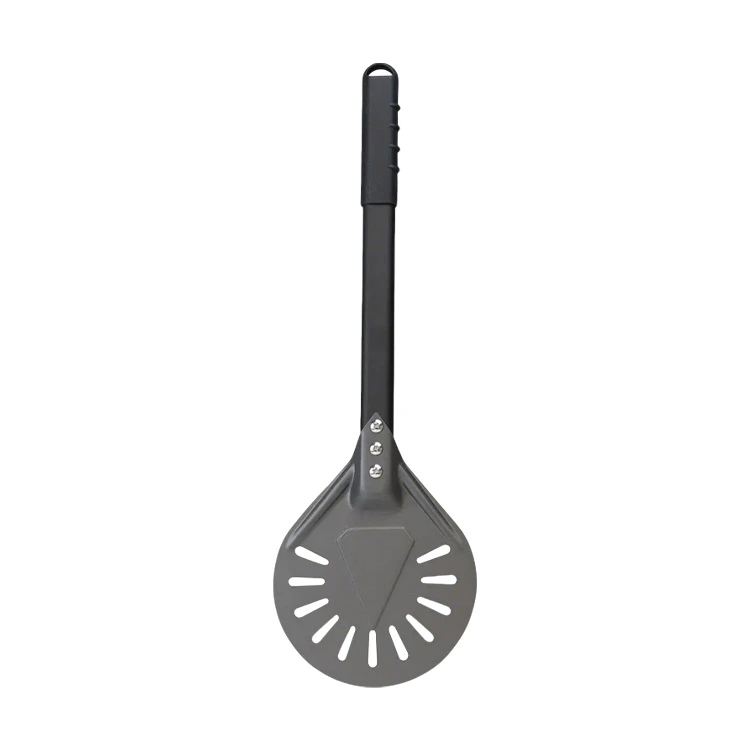
Table of Contents
- Why Does a Perforated Pizza Turning Peel Matter?
- How Does the Perforated Design Improve Pizza Handling?
- What Specifications Should Buyers Consider?
- What Are the Main Performance Advantages?
- Where Can a Pizza Turning Peel Be Used?
- What Should Wholesale Buyers Look For?
- How Does Construction Affect Long-Term Reliability?
- Frequently Asked Questions
Why Does a Perforated Pizza Turning Peel Matter?
Pizza baking often involves temperatures far above those used for ordinary household cooking. In wood-fired, gas, and high-temperature electric pizza ovens, a pizza may require rapid rotation to prevent one section of the crust from receiving excessive heat.
A traditional solid peel can collect loose flour from the work surface and pizza base. When this flour enters a very hot oven, it can scorch quickly, producing smoke and unwanted residue. A perforated metal design addresses this issue by reducing the amount of flour that remains on the blade.
The result is a tool designed around three practical requirements:
- Quick and controlled pizza rotation.
- Reduced flour accumulation and scorching.
- Stable handling in high-temperature baking environments.
For Neapolitan-style pizza and other fast-baking formats, these characteristics can be particularly useful because the operator has limited time to make adjustments before the crust is fully baked.
How Does the Perforated Design Improve Pizza Handling?
The most distinctive feature of this pizza tool is its hollow or perforated blade. Instead of presenting one continuous metal surface, the blade incorporates openings that reduce contact with loose flour.
Reduced Flour Buildup
Flour used during dough preparation can remain underneath a pizza before it enters the oven. A perforated blade helps reduce the amount of loose flour carried into the oven, which can help minimize burning and smoke.
Better Airflow
The openings in the blade allow airflow through the peel rather than trapping material across a completely solid surface. This design can make the tool more suitable for rapid pizza rotation where smooth movement is important.
Controlled Rotation
A turning peel is different from a conventional launching peel because its primary purpose is to reposition a pizza while it is already baking. The operator can lift a portion of the pizza, rotate it, and return it to the oven without fully removing the pizza from the heat source.
What Specifications Should Buyers Consider?
When selecting a pizza turning peel for commercial or household use, dimensions, materials, grip design, and joint construction all affect practical performance. The following specifications describe the GERING model:
| Specification | GERING Design | Practical Benefit |
|---|---|---|
| Blade Material | Aluminum alloy | Lightweight structure for easier handling |
| Blade Design | Perforated / hollow | Helps reduce flour buildup |
| Handle | Heat-insulated silicone | Provides a non-slip, heat-conscious grip |
| Joint | Riveted construction | Supports repeated mechanical use |
| Dimensions | 56.5 × 18 × 2 cm | Compact format for pizza oven operation |
| Approx. Weight | 260 g | Reduces handling fatigue during repeated use |
| Blade Thickness | 2.0 mm | Balances rigidity and maneuverability |
For buyers comparing different pizza tools, specifications should always be considered alongside the intended oven temperature, pizza diameter, frequency of use, and handling environment.
What Are the Main Performance Advantages?
1. Cleaner Oven Operation
Less loose flour remaining on the peel can help reduce the amount of flour entering the oven. This is especially useful when pizzas are baked at high temperatures where excess flour can burn rapidly.
2. More Convenient Pizza Rotation
The turning function allows an operator to reposition a pizza while it remains inside the oven. This can help maintain the cooking process without requiring the pizza to be removed completely.
3. Heat-Conscious Handle Design
The silicone handle provides an insulated gripping area for operation around a hot oven. Its non-slip characteristics also support more controlled movement when the tool is being used repeatedly.
4. Reinforced Construction
The blade and handle are joined through a riveted structure. For commercial kitchens where tools may be used many times per day, the joint is an important consideration because repeated movement can place stress on the connection.
5. Lightweight Handling
At approximately 260 g, the peel is designed to remain maneuverable. A lighter tool can be particularly useful when operators repeatedly rotate pizzas during busy service periods.
Where Can a Pizza Turning Peel Be Used?
The design is suitable for a broad range of pizza preparation environments. Typical applications include:
- Wood-fired pizza ovens: Useful for rotating pizzas exposed to intense direct heat.
- Gas pizza ovens: Supports quick repositioning during active baking.
- Electric commercial ovens: Suitable for professional kitchen workflows.
- Neapolitan pizza kitchens: Helpful for fast-baking pizzas requiring close attention.
- Restaurants and pizzerias: Designed for repeated operational use.
- Outdoor pizza cooking: Convenient for backyard or mobile cooking setups.
- Culinary training kitchens: Useful for teaching pizza handling and oven management.
Because the correct tool depends on the oven configuration and pizza size, buyers should confirm dimensions and operating requirements before placing larger orders.
What Should Wholesale Buyers Look For?
For distributors, restaurant-equipment suppliers, and kitchenware importers, purchasing decisions involve more than the basic appearance of a pizza peel. Consistency between batches, material selection, packaging, customization capability, and production capacity can all influence the suitability of a supplier.
Material Consistency
Food-contact kitchenware should use appropriate materials for the intended application. GERING specifies food-grade aluminum alloy for the blade and food-contact-safe silicone for the grip.
Production Capacity
GERING states an annual capacity of more than 6 million units across its manufacturing operations. This can be relevant for distributors planning recurring orders or expanding a pizza-accessory product line.
OEM and ODM Support
Private-label buyers may require changes to packaging, branding, specifications, or product presentation. A supplier offering OEM/ODM support can simplify the process of developing products for different market segments.
Quality Inspection
GERING's product information states that each peel undergoes unit inspection before packaging, with dimensional verification for the blade. The stated testing information also includes high-temperature testing and rivet pull-force testing.
How Does Construction Affect Long-Term Reliability?
Repeated commercial use places different demands on a pizza tool than occasional home baking. The blade needs sufficient rigidity for controlled movement, while the handle and joint must remain secure during repeated rotation.
The GERING design combines an aluminum alloy blade with a heat-insulated silicone grip and rivet-reinforced connection. According to the product specifications, the blade is 2.0 mm thick, while the stated dimensional inspection tolerance is ±0.05 mm.
The manufacturer also lists high-temperature resistance testing at 250°C / 480°F for 72 hours and rivet pull-force testing at 50 kg. These figures are manufacturer-provided testing information and should be evaluated according to the buyer's own application requirements and applicable market regulations.
For importers, these details can provide useful checkpoints when comparing suppliers and defining quality requirements for purchase orders.
Frequently Asked Questions
What is a perforated metal pizza turning peel?
It is a pizza oven tool with an open or perforated metal blade designed primarily for rotating pizzas during baking. The perforations help reduce flour buildup on the blade and can improve airflow through the tool.
Can this pizza turning peel be used in a wood-fired oven?
Yes. The GERING model is designed for use with wood-fired, gas, and electric pizza ovens. Users should always follow the temperature and operating recommendations applicable to their specific oven.
Does the perforated blade reduce the strength of the peel?
The perforated structure is reinforced through the aluminum alloy blade and riveted joint construction. The manufacturer also states that the rivet structure is tested for mechanical strength and repeated-use durability.
Is the handle designed for high-temperature operation?
The handle uses heat-insulated silicone and is designed to provide a more secure grip when working around hot pizza ovens.
What is the size of the GERING pizza turning peel?
The stated overall dimensions are approximately 56.5 × 18 × 2 cm, with a product weight of approximately 260 g.
Is the product available for wholesale or OEM orders?
Yes. GERING offers factory-direct purchasing, wholesale, OEM, ODM, and sample-order options. Buyers can discuss packaging, customization, order quantities, and logistics requirements with the export team.
Conclusion
A well-designed pizza turning tool can make a noticeable difference when pizzas must be rotated quickly inside a high-temperature oven. The perforated blade helps reduce flour accumulation, while the lightweight aluminum alloy construction, insulated silicone grip, and rivet-reinforced joint are designed for controlled and repeated operation. For restaurants, distributors, pizzerias, and kitchenware importers, the GERING Perforated Metal Pizza Turning Peel provides a practical combination of handling performance, material considerations, and OEM/ODM supply support. If you are sourcing pizza accessories for your market or developing a private-label kitchenware range, contact us to discuss specifications, samples, wholesale pricing, customization, and delivery requirements.